Striking out on your own can be a harrowing experience, even when it’s a path you choose. If you’re thinking about going freelance, I’m hosting a free Zoom session on Monday, May 13, on everything you need to know to make it as a freelance journalist.
I’ve been a freelance journalist for more than ten years now, and I’ve been through many of the ups and downs of this business. I’ve had bylines with everyone from The Atlantic to Elle Magazine, Fortune, Forbes, Fast Company, TechCrunch, The Verge, Travel & Leisure, and MANY more. I also spent more than ten years as a senior producer at CNN in New York.
I am deeply familiar with a wide variety of formats, including podcasting, broadcasting, television production, magazine writing, news journalism, features, and more. I’ve interviewed world and business leaders and everyday people and have a ton of experience in helping fellow freelancers launch and sustain their careers.
We’ll spend an hour chatting about the future of freelance journalism and how you can set yourself up to land pitches and run a successful six-figure freelance journalism business just like mine.
I run these sessions each month, so if you can’t make tomorrow’s session there will be one coming up in June!
If you’d like to attend, sign up here, and come with your questions and concerns! I’m also happy to simply network with you and chat through any questions you might have about the future of this strange, but amazing business.
Those who attend live will get a special gift at the end of the session and get a sneak preview of my weekly Six-Figure Journalism Jobs newsletter that goes out every single week and includes calls for pitches (with editor email addresses!), pitch guides, rates and more.
All the jobs on my weekly list pay a minimum of $1 per word or more, or $100,000 per year, and are remote-friendly. If you’d like to sign up to get the weekly newsletter $5 per month gets you access. The newsletter goes out each Wednesday morning at 9 am PT.
I’ve been a successful freelance journalist for more than ten years, and I have many strategies, techniques, and talents for finding relevant, high-paying, and worthwhile full-time and freelance journalism, communications, video, television, social media, writing and editing jobs on the market.
Every Wednesday morning at 9 am PT, I send out a curated list of new, freelance calls-for-pitches and full-time remote and hybrid jobs that pay a real and living wage: At least $1 per word for freelance work, and a minimum of $100,000 per year for full-time work.
If you have serious newsletter fatigue and are tired of scrolling through newsletters that offer work for $0.10 per word (as if that’s a real wage) or under $100k for decades of experience, then this newsletter is for you. In a literal sea of newsletters, this one stands out for seven, distinct reasons.
1. All Freelance Journalism Gigs Pay a Minimum of $1 Per Word OR MORE
There was a time when $1 per word was a minimum. Today, with the advent of AI, mass layoffs, and more, it’s getting more difficult to find calls-for-pitches that pay this minimum. Each week, I curate freelance gigs and calls directly from editors that pay a minimum of $1 per word or offer an excellent byline opportunity (especially if you’re looking to broaden the type of coverage you do or want to move into a new beat).
Paid subscribers to my jobs newsletter get a different curated list in their inbox each week. I also do my best to include outlets you’ve heard of (or those with outstanding reputations), in case you’re looking to shift coverage.
2. Editor’s Email Addresses, Coverage Notes & Pitching Guides are Included in Every Newsletter
Stop wasting your valuable time trying to construct an editor’s email address. Each freelance call includes a way to contact the right editor. No searching is necessary.
I always recommend that monthly paid subscribers archive these emails as a valuable way to update contacts and keep the right editor contacts on hand when you have a great pitch that you want to send. I’m also currently working on building a database of editor names aemail addresses
3. All Jobs & Freelance Gigs are Fully-Remote or Hybrid
I have been a remote worker for most of my career and know that being remote is tremendously valuable as a freelancer and full-timer. All jobs included in this weekly paid newsletter are full-remote unless they offer a fantastic opportunity, in which case, I note where they are located.
In the cases where the job is not remote, I note it at the end of the listing like this:
4. All Full-Time Journalism & Communications Jobs Pay a Minimum of Six-Figures ($100,000) Per Year OR MORE
Yes. Really. I work hard to find these jobs for paid subscribers and include them in each weekly newsletter. After all, we’re skilled, talented, and highly-experienced professionals and we should be paid professional, living-wage salaries.
5. I Have Been Working in Journalism & Communications For More Than 15 Years & Provide Insights You Won’t Find Anywhere Else
Want to know what an office environment is really like? I’ve got you. I have worked in many places with many talented (and, sadly, horribly untalented) people. This newsletter is for you if you want the inside scoop on many major media outlets. I pull no punches (and you can always email me for more details if you have questions about my “Editor’s Notes.”)
6. Everyone Loves the “Dishonorable Mentions” list
Each week as I troll the listings I compile some of the worst-paying and most abusive jobs that are currently on the market. God knows, there are plenty. I offer insights as to why the wages are so bad, red flags to watch out for in job listings that “sound too good to be true” and what to do when you are asked to do a “free trial” for an application. This is the most popular section of the entire newsletter and subscribers regularly thank me for my candidness in this section.
7. You Don’t Have to Spend Hours of Time Looking for High-Paying Work. I Do It For You Every Single Week.
For less than the cost of a cup of coffee, I do the work for you. Every single week. The newsletter goes out on Wednesday mornings at 9 a.m. PT.
When you sign up for a monthly $5 subscription, you’ll get access to the most recent newsletter plus all the others I’ve posted on Beehiiv.
What do you do when the job opportunity you’re interested in wants story ideas and “sample” work before they decide to interview or pay you?
It’s the age-old question: Do you do a whole bunch of free work to possibly land a gig? The answer is frequently fraught and often frustrating–but here’s what you need to know.
“Send me three well-researched pitches…” and Maybe I’ll Pay You for Them, or Maybe I’ll Assign Them to my Full-Time Staff
I was recently trolling the job listings and came across a freelance ghostwriting gig that looked promising on LinkedIn. It was an “Easy Apply” gig, but upon reading the description, it turned out that the poster wanted applicants to email them directly with as many as 10 (!!!) links to relevant bylines, a cover letter, and a resume.
“Ok, fine.” I sighed and got to emailing. I also clicked that “Easy Apply” button, just to indicate that I was a serious applicant and interested in the spot.
A few hours later, I got a note in my LinkedIn Messages. There, the job poster enumerated a proposed “exercise” assignment, as he called it.
He requested that I come up with a “provocation,” which immediately set alarm bells off in my head. In today’s hotly partisan world, that generally means an “unpopular opinion,” or “hot take,” that frequently smells of rage baiting, a common technique to boost views and interactions on a website. He even went through a list of questions I should ask myself about the topic (cue the deep side eye from experienced journalists).
His note went on to say that once the company approved my “provocation,” I “will find an excellent expert on the matter,” who could argue that point of view, then I’d reach out to that “expert” to “get their interest,” (MLM anyone?). At that point, the hiring company would decide if I should proceed to “work with that person to write the article.”
The kicker? “We can offer you $500 if we decide to publish the article based on the assignment.”
Um…
The Issues Around the Unpaid-Work Interview
If you subscribe to my weekly freelance and full-time journalism job listings, you know I pull no punches about how journalists are paid and what professional-level writers, editors, television producers, podcasters, and broadcasters deserve for their experience and work.
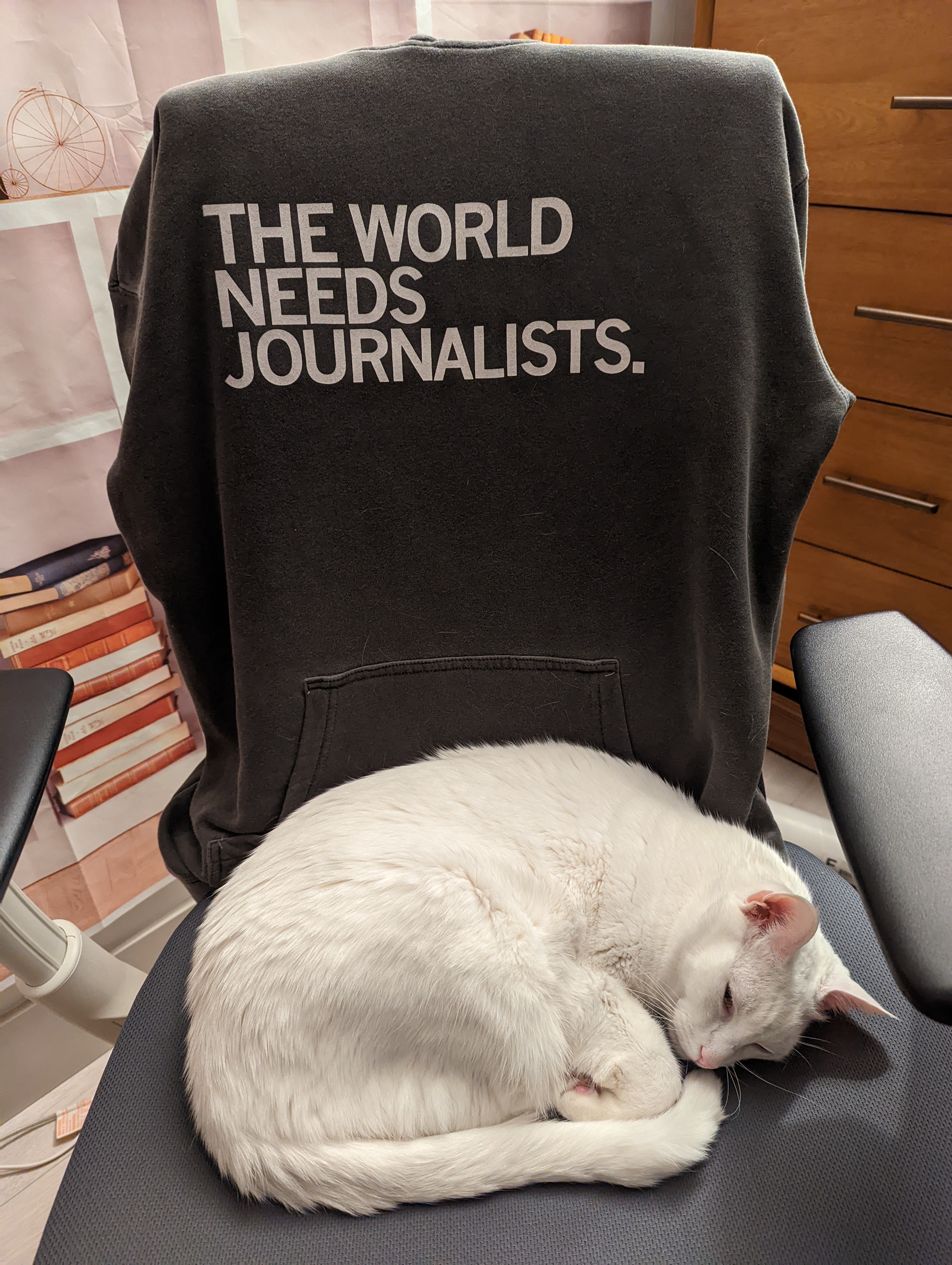
I advocate for a fair, living wage to be paid to those of us who are professional journalists working hard to dig up the truth about the world and share knowledge because I sincerely believe (to quote my CNN sweatshirt that hangs on the back of my office chair) The World Needs Journalists.
All of this brings me to the core issue of the “Unpaid-Work” interview: Sharing story ideas, pitches, and even doing “exercise” assignments before an employer has even decided if they want to interview or hire you is a SCAM that’s perpetuated by corporate overlords who aim to suck every ounce of creativity out of the largest number of applicants.
Read that again. The Unpaid-Work Interview Is. A. Scam.
…
How do I know? I’ve seen it happen–from both inside and outside major media outlets.
I’ve watched a number of major media outlets (who will publicly remain unnamed) put applicants through the “Unpaid-Work” rigamarole because they’ve burned out their own journalists and content creators so fiercely that the full-time employees are mere shells.
I’ve seen those stories, pitches, and “exercise” assignments sent in by job seekers, stolen by management, and assigned to junior staff reporters just so those managers can tout how they have their “finger on the pulse” of what’s happening in the world. “Hey, look at how great our numbers are,” they pronounce, knowing full well they mined hard-working job applicants for the ideas.
I’ve also seen it from the job seekers’ side of the equation–both in freelance and full-time opportunities. I’ve even gone so far as to do one or two of these Unpaid-Work Interviews because I really did want to work for the outlet or publication.
Sadly, after doing a couple of them and later discovering that my ideas had been stolen by the outlet or publication and assigned to someone else, I refuse to do them anymore. I also have put those outlets (and the editors I dealt with there) on no-fly lists, meaning that I will not work for, write for, or publish with those people or publications.
How to Handle an “Unpaid-Work” Interview?
There are a couple of ways you can handle the Unpaid-Work Interview:
Decide to go for it, expecting your content to be stolen if you are not hired.
Decide to pass, and wish the job poster well. (i.e., “Thank you so much for the opportunity to move forward in the interview process, but unfortunately, I’ll need to withdraw my application for this position. Best of luck in your search…”
At this point in my career, the Unpaid-Work Interview is a major red flag that immediately takes that publication and editor off of my radar. It’s really up to you how you choose to proceed, but if you decide to go for the Unpaid-Work Interview, know that your work will likely end up under someone else’s byline.
Oh, and funny enough, I got the exact same, word-for-word, email in my inbox about 12 hours after the note landed in my LinkedIn messages about that job.