7 Reasons My Six-Figure Jobs Newsletter Stands Out From All the Rest

Advice for Freelancers, Content Badasses, Freelance Journalism Jobs of the Week, How Do You Find the Best Freelancers?, Managing Your Content Business, Video Content, Why You Need a Freelancer

I’ve been a successful freelance journalist for more than ten years, and I have many strategies, techniques, and talents for finding relevant, high-paying, and worthwhile full-time and freelance journalism, communications, video, television, social media, writing and editing jobs on the market.

I have been running the highly successful and very popular Six-Figure Journalism, Writing & Communications Newsletter for the last two years. While I’ve archived the old posts I used to put up on this site, I’m transitioning to Beehiiv, where you can see all of the latest posts, editor email addresses, pitching guides and insights I offer every single week, once you become a paying subscriber.

Every Wednesday morning at 9 am PT, I send out a curated list of new, freelance calls-for-pitches and full-time remote and hybrid jobs that pay a real and living wage: At least $1 per word for freelance work, and a minimum of $100,000 per year for full-time work.

If you have serious newsletter fatigue and are tired of scrolling through newsletters that offer work for $0.10 per word (as if that’s a real wage) or under $100k for decades of experience, then this newsletter is for you. In a literal sea of newsletters, this one stands out for seven, distinct reasons.

1. All Freelance Journalism Gigs Pay a Minimum of $1 Per Word OR MORE

There was a time when $1 per word was a minimum. Today, with the advent of AI, mass layoffs, and more, it’s getting more difficult to find calls-for-pitches that pay this minimum. Each week, I curate freelance gigs and calls directly from editors that pay a minimum of $1 per word or offer an excellent byline opportunity (especially if you’re looking to broaden the type of coverage you do or want to move into a new beat).

Paid subscribers to my jobs newsletter get a different curated list in their inbox each week. I also do my best to include outlets you’ve heard of (or those with outstanding reputations), in case you’re looking to shift coverage.

2. Editor’s Email Addresses, Coverage Notes & Pitching Guides are Included in Every Newsletter

Stop wasting your valuable time trying to construct an editor’s email address. Each freelance call includes a way to contact the right editor. No searching is necessary.

I always recommend that monthly paid subscribers archive these emails as a valuable way to update contacts and keep the right editor contacts on hand when you have a great pitch that you want to send. I’m also currently working on building a database of editor names aemail addresses

3. All Jobs & Freelance Gigs are Fully-Remote or Hybrid

I have been a remote worker for most of my career and know that being remote is tremendously valuable as a freelancer and full-timer. All jobs included in this weekly paid newsletter are full-remote unless they offer a fantastic opportunity, in which case, I note where they are located.

In the cases where the job is not remote, I note it at the end of the listing like this:

4. All Full-Time Journalism & Communications Jobs Pay a Minimum of Six-Figures ($100,000) Per Year OR MORE

Yes. Really. I work hard to find these jobs for paid subscribers and include them in each weekly newsletter. After all, we’re skilled, talented, and highly-experienced professionals and we should be paid professional, living-wage salaries.

5. I Have Been Working in Journalism & Communications For More Than 15 Years & Provide Insights You Won’t Find Anywhere Else

Want to know what an office environment is really like? I’ve got you. I have worked in many places with many talented (and, sadly, horribly untalented) people. This newsletter is for you if you want the inside scoop on many major media outlets. I pull no punches (and you can always email me for more details if you have questions about my “Editor’s Notes.”)

If you’d like to know more about me and my work, you can check out my bio at my portfolio site at abigailbassett.com

6. Everyone Loves the “Dishonorable Mentions” list

Each week as I troll the listings I compile some of the worst-paying and most abusive jobs that are currently on the market. God knows, there are plenty. I offer insights as to why the wages are so bad, red flags to watch out for in job listings that “sound too good to be true” and what to do when you are asked to do a “free trial” for an application. This is the most popular section of the entire newsletter and subscribers regularly thank me for my candidness in this section.

7. You Don’t Have to Spend Hours of Time Looking for High-Paying Work. I Do It For You Every Single Week.

For less than the cost of a cup of coffee, I do the work for you. Every single week. The newsletter goes out on Wednesday mornings at 9 a.m. PT.

When you sign up for a monthly $5 subscription, you’ll get access to the most recent newsletter plus all the others I’ve posted on Beehiiv.

The Freedom and Joy of Being a Freelance Journalist in an Era of Media “Doom and Gloom”

Advice for Freelancers, Content Badasses, Managing Your Content Business, Why You Need a Freelancer

I’ve been a successful Six-Figure Freelance Journalist for ten years now, almost to the day. I started my company, CNTRL Media, back in 2014 during a time of tremendous transition in my life. It felt right, it felt scary, but most of all, it felt like something I was deeply drawn to and could no longer ignore. Taking the leap felt huge, but it also felt right.

Since then, I haven’t looked back.

Last night, as I was scrolling through my Instagram feed (as I am want to do when I unwind at the end of the day), I stumbled across a post from Parm Kaur, a poet who posts their work on Instagram.

This piece by Parm Kaur resonated with me. Does it resonate with you?

Since we all know the algorithm has our number, I wasn’t surprised that the piece resonated with me, but rather how deeply it resonatedโ€”especially when I think about my ten-year career as a full-time freelancer.

I’ve always said that freelancing is like a choose-your-own-adventure book. You get to cover and write about what you’re passionate about, like I do: Whether it’s tech, AI, the economy, business, automotive and transportation, politics, social justice, the environment, travel, health & wellness, or more. Like me, you get to see your byline in major publications like The Atlantic, The Verge, TechCrunch, Fortune, Forbes, Fast Company, Elle Magazine, Travel & Leisure, and National Geographic. But much more than that, you can color outside the lines and find your own real freedom–because every cent you earn is completely yours.

The piece by Parm above truly resonated with me because it embodies this idea of finding your freedom to create outside of the constructs of a boss, a corporation, or an advertising goal.

Freelancing is truly about the freedom and space you create when you realize that you can, in fact, do this on your own and that you are damn good at it.

I’m not here to tell you that it’s all sunshiney days and unicorns. No. Being a successful freelance journalist takes hard work, dedication, commitment, and, most of all, honesty and transparency. There are plenty of down days when you’re chasing another late payment, or another frustrating editor who refuses to respond. There are plenty of dire statistics to make you question what you’re actually doing with your life.

But here’s the thing—I regularly connect over Zoom with past colleagues and new subscribers to my Six-Figure Journalism Jobs Newsletter to talk about the trials and tribulations of freelancing. One of the things I’ve consistently heard in the last few months is that this year is different. Successful freelancers have seen their income level off, rates have been slashed, the media landscape is shifting rapidly thanks to AI (as I wrote a few weeks ago), and more, and the advertising model is breaking down.

While all of that sounds like dire news, the thing that comes up directly after discussing how terribly someone pays or which horrific editors at high-profile outlets to avoid, is that there’s nothing better than being able to do your work, your way, on your time, and be paid a living wage for it. Every single successful freelance journalist feels this in their bones.

There is something powerful and passionate about the creative people who have been at this for a long time. They tend to see a world of work that offers massive freedom, over the noise of the dire stats you hear so frequently.

Ultimately, this all explains why I started my weekly paid newsletter, which features remote journalism and writing jobs paying a minimum of $1 per word or $100,000 per year.

I send a new newsletter out every Wednesday at 9 a.m. PT. To date, I’ve sent 54 newsletters with new journalism jobs every week.

I include editor email addresses, any pitching guides I can find, and all kinds of unique leads.

Subscribers say that they really enjoy the newsletter and that it has become an invaluable resource for their work.

As the newsletter has grown, I’ve started to receive job listings that haven’t hit the market yet (aka pocket listings) looking for talented, skilled, and seasoned professionals who deserve to make a living wage. I began this project a little over a year ago because I truly believe in the value of real, factual journalism in today’s world, and the real need to pay people rates that actually pay the rent. From where I sit, one year on, it’s been well worth the time and effort.

If you’d like to continue on this journey with me and learn how to become a successful six-figure freelance journalist, you can become a paid subscriber for just $5 per month or join me for my next Freelancing 101 session (it’s free!) in September.

I promise it will open doors you never imagined.

Freelancing 101: Free Online Session!

Advice for Freelancers, Content Badasses

Striking out on your own can be a harrowing experience, even when it’s a path you choose. If youโ€™re thinking about going freelance, Iโ€™m hosting a free Zoom session on Monday, May 13, on everything you need to know to make it as a freelance journalist.

I’ve been a freelance journalist for more than ten years now, and I’ve been through many of the ups and downs of this business. I’ve had bylines with everyone from The Atlantic to Elle Magazine, Fortune, Forbes, Fast Company, TechCrunch, The Verge, Travel & Leisure, and MANY more. I also spent more than ten years as a senior producer at CNN in New York.

I am deeply familiar with a wide variety of formats, including podcasting, broadcasting, television production, magazine writing, news journalism, features, and more. I’ve interviewed world and business leaders and everyday people and have a ton of experience in helping fellow freelancers launch and sustain their careers.

I’m not going to lie; the current environment is strange thanks to AI, media cuts, and the increasing polarization of our country, and it can feel daunting to try and navigate the freelance journalism world solo. That’s why, on Monday, May 13, at 12:00pm PT, I’m offering a FREE Zoom session for both those considering going freelance and those who are already freelance and looking for a little guidance or community.

We’ll spend an hour chatting about the future of freelance journalism and how you can set yourself up to land pitches and run a successful six-figure freelance journalism business just like mine.

I run these sessions each month, so if you can’t make tomorrow’s session there will be one coming up in June!

If you’d like to attend, sign up here, and come with your questions and concerns! I’m also happy to simply network with you and chat through any questions you might have about the future of this strange, but amazing business.

Those who attend live will get a special gift at the end of the session and get a sneak preview of my weekly Six-Figure Journalism Jobs newsletter that goes out every single week and includes calls for pitches (with editor email addresses!), pitch guides, rates and more.

All the jobs on my weekly list pay a minimum of $1 per word or more, or $100,000 per year, and are remote-friendly. If you’d like to sign up to get the weekly newsletter $5 per month gets you access. The newsletter goes out each Wednesday morning at 9 am PT.

I hope to see you at tomorrow’s Freelance 101 Session!

The Best (Free) Tools For Journalists: LinkedIn for Journalists

Advice for Freelancers, Content Badasses, Managing Your Content Business

When I first began in television, I used to have to go down to the public library in New York City and pull public records to get in touch with everyone from the Governor of New York to my next-door neighbor to book them on the show I worked for. It was labor intensive, frequently difficult, and almost always a pain in the ass. 

These were the days when you maintained a massive Rolodex (which I had!) and protected it at all costs, taking it with you from job to job, because you never knew when you might need to call up the head of the UAW, or reach out to that popular stylist that worked with a guest on your show.

If youโ€™re a freelancer or a full-time journalist, you know far too well how much work it takes to track down contacts, get anecdotes, and find the right person to connect with to book an interview. Just trying to find and connect with the right expert can take hours of research and more than a few wrong turns.

The Evolution of the LinkedIn Pay Wall

Yet, ever since the advent of LinkedIn, (which admittedly has its pros and cons in the modern era), that task has become as simple as typing a few keywords into a search bar and hitting enter. At least, it was much more convenient until LinkedIn started pay-walling the stuff you really need and want as a journalistโ€“like contact information and free messaging with people youโ€™re not connected with. 

During my tenure at CNN, LinkedIn introduced a system tailored for journalists. They verified us as professionals and granted free access to the previously restricted features. This access led to numerous exclusive stories, as our team could spot key company movements or executive changes. LinkedIn became an indispensable tool for trend stories and leads and a must-have for every journalist.

How to Get Free Access to LinkedIn Premium as a Freelance or Full-Time Journalist

When I transitioned to freelancing a decade ago, I feared losing this invaluable access and facing steep subscription fees, which now go into the $30 and up per month range. However, my former colleagues, now leading LinkedIn’s editorial side, recognized the significance of freelancers. They ensured our continued access to the LinkedIn for Journalists Program with an annual renewal process.

If youโ€™re wondering what the Premium tier of access gets you versus what the free model gets you, check out the table below, courtesy of LinkedIn. By far, the most valuable services are the free InMail credits and the ability to get more details about someone youโ€™re not connected with directly.ย 

Iโ€™ve been a part of the LIJP for the last ten years, and I cannot say enough good things about it. Sure, Iโ€™ve accidentally let it lapse, but itโ€™s always been easy to re-up when the application period opens each quarter. Itโ€™s worth the five minutes of work you have to do and the (now) three-month wait to find out if youโ€™ve been accepted. When you get accepted into the program, you get a premium code that unlocks your access.ย 

Applications are Open Through October 31, 2023

Applications are now open, and itโ€™s well worth putting together five links to current stories (dated within the last six months)ย  and a few words about yourself to get access to one of the most valuable databases of professional contacts in the world. You can learn more about the application process here and fill out the form, here. Applications close in October, so make sure you donโ€™t miss the window.ย 

How to Handle the “Unpaid-Work” Interview

Advice for Freelancers, Content Badasses, Managing Your Content Business, Why You Need a Freelancer

What do you do when the job opportunity youโ€™re interested in wants story ideas and โ€œsampleโ€ work before they decide to interview or pay you?

Itโ€™s the age-old question: Do you do a whole bunch of free work to possibly land a gig? The answer is frequently fraught and often frustratingโ€“but hereโ€™s what you need to know.ย 


โ€œSend me three well-researched pitchesโ€ฆโ€ and Maybe Iโ€™ll Pay You for Them, or Maybe I’ll Assign Them to my Full-Time Staff

I was recently trolling the job listings and came across a freelance ghostwriting gig that looked promising on LinkedIn. It was an โ€œEasy Applyโ€ gig, but upon reading the description, it turned out that the poster wanted applicants to email them directly with as many as 10 (!!!) links to relevant bylines, a cover letter, and a resume. 

โ€œOk, fine.โ€ I sighed and got to emailing. I also clicked that โ€œEasy Applyโ€ button, just to indicate that I was a serious applicant and interested in the spot.ย 

A few hours later, I got a note in my LinkedIn Messages. There, the job poster enumerated a proposed โ€œexerciseโ€ assignment, as he called it. 

He requested that I come up with a โ€œprovocation,โ€ which immediately set alarm bells off in my head. In todayโ€™s hotly partisan world, that generally means an โ€œunpopular opinion,โ€ or โ€œhot take,โ€ that frequently smells of rage baiting, a common technique to boost views and interactions on a website. He even went through a list of questions I should ask myself about the topic (cue the deep side eye from experienced journalists).ย 

His note went on to say that once the company approved my โ€œprovocation,โ€ I โ€œwill find an excellent expert on the matter,โ€ who could argue that point of view, then Iโ€™d reach out to that โ€œexpertโ€ to โ€œget their interest,โ€ (MLM anyone?). At that point, the hiring company would decide if I should proceed to โ€œwork with that person to write the article.โ€

The kicker? โ€œWe can offer you $500 if we decide to publish the article based on the assignment.โ€

Umโ€ฆ


The Issues Around the Unpaid-Work Interview

If you subscribe to my weekly freelance and full-time journalism job listings, you know I pull no punches about how journalists are paid and what professional-level writers, editors, television producers, podcasters, and broadcasters deserve for their experience and work.

I point out when a job or gig is very well paying (those on my list pay at least $1 per word or more for freelance work, and generally above $100,000 per year if it’s full-time) and offer any insight I may have about the workplace. (In case you donโ€™t know, Iโ€™ve worked for a LOT of high-profile outlets and places, and I can tell you MANY of the nitty gritty details about all of them.)

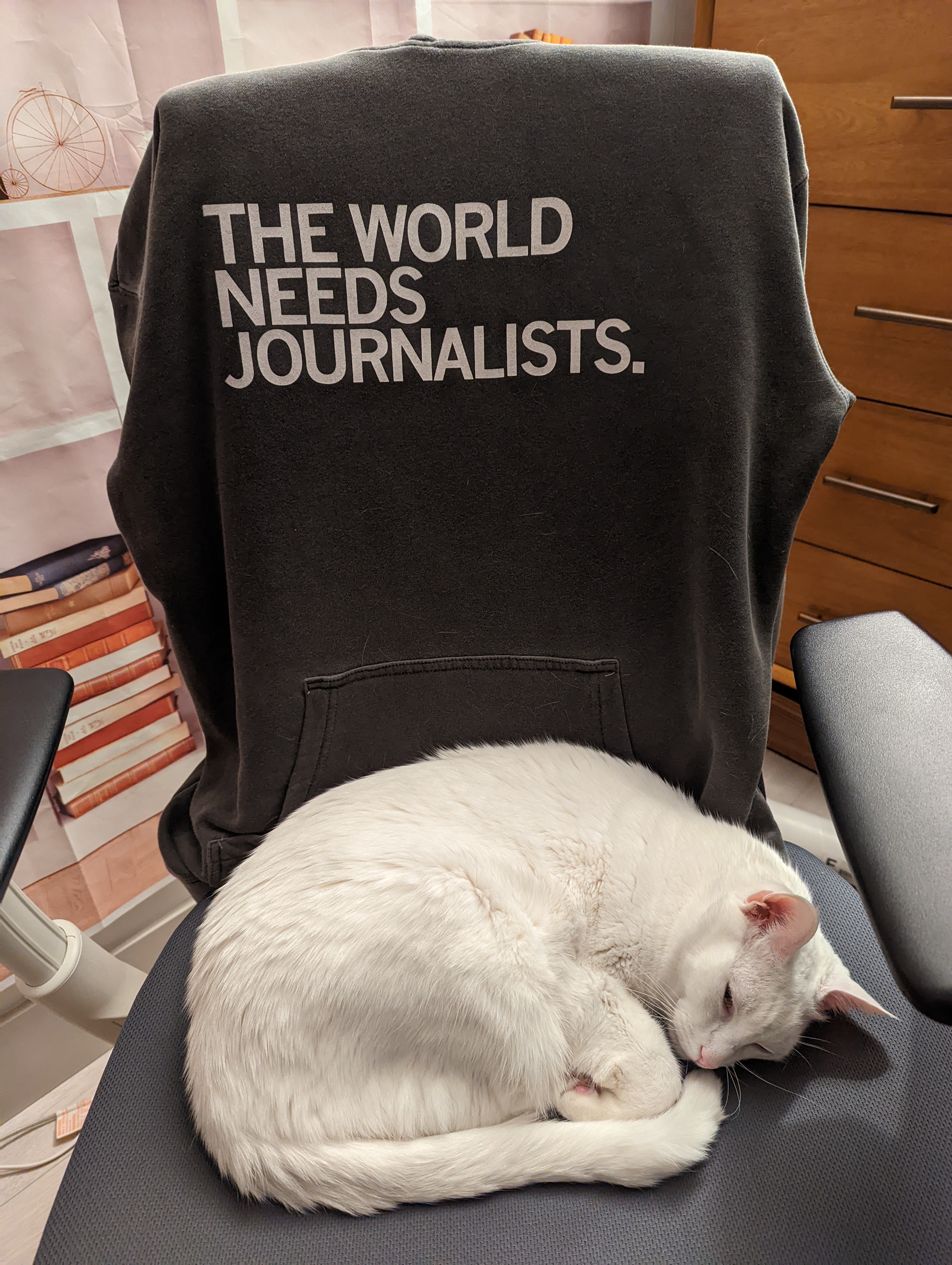
I advocate for a fair, living wage to be paid to those of us who are professional journalists working hard to dig up the truth about the world and share knowledge because I sincerely believe (to quote my CNN sweatshirt that hangs on the back of my office chair) The World Needs Journalists.ย 

All of this brings me to the core issue of the โ€œUnpaid-Workโ€ interview: Sharing story ideas, pitches, and even doing โ€œexerciseโ€ assignments before an employer has even decided if they want to interview or hire you is a SCAM thatโ€™s perpetuated by corporate overlords who aim to suck every ounce of creativity out of the largest number of applicants.ย 

Read that again. The Unpaid-Work Interview Is. A. Scam.

How do I know? Iโ€™ve seen it happenโ€“from both inside and outside major media outlets.

Iโ€™ve watched a number of major media outlets (who will publicly remain unnamed) put applicants through the โ€œUnpaid-Workโ€ rigamarole because theyโ€™ve burned out their own journalists and content creators so fiercely that the full-time employees are mere shells.

Iโ€™ve seen those stories, pitches, and โ€œexerciseโ€ assignments sent in by job seekers, stolen by management, and assigned to junior staff reporters just so those managers can tout how they have their โ€œfinger on the pulseโ€ of whatโ€™s happening in the world. โ€œHey, look at how great our numbers are,โ€ they pronounce, knowing full well they mined hard-working job applicants for the ideas.ย 

Iโ€™ve also seen it from the job seekers’ side of the equationโ€“both in freelance and full-time opportunities. Iโ€™ve even gone so far as to do one or two of these Unpaid-Work Interviews because I really did want to work for the outlet or publication.

Sadly, after doing a couple of them and later discovering that my ideas had been stolen by the outlet or publication and assigned to someone else, I refuse to do them anymore. I also have put those outlets (and the editors I dealt with there) on no-fly lists, meaning that I will not work for, write for, or publish with those people or publications.ย 


How to Handle an “Unpaid-Work” Interview?

There are a couple of ways you can handle the Unpaid-Work Interview:

  • Decide to go for it, expecting your content to be stolen if you are not hired. 
  • Decide to pass, and wish the job poster well. (i.e., โ€œThank you so much for the opportunity to move forward in the interview process, but unfortunately, Iโ€™ll need to withdraw my application for this position. Best of luck in your searchโ€ฆโ€

At this point in my career, the Unpaid-Work Interview is a major red flag that immediately takes that publication and editor off of my radar. Itโ€™s really up to you how you choose to proceed, but if you decide to go for the Unpaid-Work Interview, know that your work will likely end up under someone elseโ€™s byline.ย 

Oh, and funny enough, I got the exact same, word-for-word, email in my inbox about 12 hours after the note landed in my LinkedIn messages about that job.

ย If you want to see which freelance job I highly recommend skipping, become a paid subscriber, and Iโ€™ll send you this weekโ€™s newsletter with that position highlighted as one to avoid.ย 

Sound off in the comments (or drop me an email) about the WORST job interview requests youโ€™ve seen. Iโ€™d love to commiserate.

How to Handle ‘Time Creep’ as a Freelance Journalist

Advice for Freelancers, Managing Your Content Business

We’re frequently hired at a per-word rate, but does that mean we must always be on Slack or attend virtual meetings? It depends…

The freelancing world has undeniably changed a lot in the last few years. It’s only been accelerated by the advent of AI, and every individual contractor out there is working hard to string enough gig work together to pay their rent, put their kids through school or ensure their animals are fed. As we face more layoffs in the media space and more highly skilled journalists go freelance, the market becomes more competitive. It’s simple supply and demand economics, right?

As the supply swells and corporate America continues to seek ways to make more money (but refuses to spend more on skilled and talented employees), freelance journalists are starting to feel the pinch. That means that in order to land a job or simply keep a client happy, many of us are taking lower paying gigs (sub $1-per-word rates are astoundingly common these days, even for VERY high profile publications), and get dragged into doing extra work, without additional compensation just to stay afloat–a thing I call “time creep.”

What is Time Creep?

Time creep is when a publication or client decides that now that they have you under contract, you’re obligated to be available to them at all times as if they are your only client. It frequently happens when there’s turmoil at a publication or company and often indicates that the client (i.e., your “boss”) feels insecure about their skills, job, or even the stories they’ve assigned you.

An Editor With a Planning Issue

For example, a friend and fellow freelance journalist recently told me a story about a client paying a flat fee of $400 per story. It’s relatively easy work. The editor at the publication assigns her a story brief, she does the reporting, turns it in on deadline, and makes one round of edits as requested–a standard deal these days

She’s highly skilled, has name recognition, has been in journalism for a long time, and has a bevy of high-profile bylines under her belt. She’s been looking for more steady freelance work for a while as a way to build a consistent base for those bigger stories she regularly lands, and this gig came to her.

On the surface, the deal makes good business sense because it makes the most of her time, allowing her to freely pitch other big swings and still keep a bedrock of consistent work coming in. She gets big bonus points for getting all of this in writing in a signed contract!

Until…

Recently her editor has decided that he wants her on content calls. Everything from story generation to scheduling calls and meetings come into her inbox. Since the client is new, she says she feels pressured to try and make at least a few of the meetings, but it’s cutting into the time she’s allocated for other clients and other pitches.

It’s also significantly cutting into that nominal $400 per story rate. The editor has also requested that she be available on Slack during business hours, even though she’s not getting any additional pay or benefits. She’s increasingly unhappy with the arrangement but reached out because she didn’t know what to do or how to handle it.

What to Do About Time Creep?

Check Your Contract

Notice any wording that includes some of the additional work you’re being asked to put in, whether it’s creating content ideas, or attending meetings that have very little to do with you; it pays to know what you have in writing.

Find Out Why Your Editor is Demanding More

Human beings don’t deal with stress well, no matter who they are or how strong their meditation practice may be (P.S. I teach meditation and yoga every single week on Zoom, so, yeah, I know.) It’s entirely possible that they got heat for assigning you a bad topic, or your story got tied up in internal politics. Take a breath, and remember that your editor (or client) is human and is probably having a momentary stress freak-out about something that is both well beyond your control and utterly unrelated to your work.

It may make sense to drop your editor a note (resist the urge to CC everyone angrily) on the side and ask why the project parameters have changed. Once you have more information, you can move on to the next step and decide how you want to move forward with the project. Remember (as one of my past, most favorite bosses used to constantly remind me); Business is not personal. Keep it professional.

Set Your Boundaries & Put it in Writing

Once you better understand what is going on with your editor/outlet/publication, it’s time to reset your boundaries and get it all in writing. If you’re willing to take on the extra work requirements after speaking with your editor, set those boundaries via email.

If, however, you’ve determined that the additional demands on your time don’t work for you, be clear about your boundaries, and what it will require from the client, should they want more of your time.

As an example, you could send an email like this:

Hi [Editor or Contact Name],

I really appreciate you clarifying why you need additional time from me, and I’m so glad we connected to discuss this. 

As a freelancer, I juggle several clients and deadlines every week. It’s vital that I understand how your needs have changed from when I was onboarded so we can find the best way to work together. 

I enjoy working with you, but because of these other obligations, and the current scope of work (contract), we have, I will only be able to do X (X being whatever you originally agreed to OR being what you discussed in another email or call regarding your work). Do you have any wiggle room in your budget to pay an hourly rate for those times when you want me to attend meetings or otherwise dedicate my time to this project?

Thanks,

[Your Name]

Give your editor some time to respond to you with details and then handle their response accordingly.

One of the joys of being your own boss is the ability to set your own boundaries around work. That means that sometimes you have to have difficult conversations about time creep. It also means that sometimes you must fire a client and find a new one. Either way, remember that business is not personal and (as one of my favorite food YouTubers might say, “You are the boss of your own dross.”

DON’T HAVE TIME TO FIND GREAT PAY FOR FREELANCE WORK?

I HAVE YOU COVERED!

Do you need help navigating the ever-evolving freelance world? Want one-on-one help with pitches, edits, or dealing with a frustrating client? Come to my office hours or a FREE Freelance Workshop! Sign up here!

Need to find a new client, or looking for new freelance work? I send out a newsletter with more than 30 new gigs that pay at least $1 per word every single week. Become a paying subscriber, today, and let me do the work for you!

Content Badasses Unite!

Content Badasses, How Do You Find the Best Freelancers?, Video Content, Why You Need a Freelancer

There are plenty of freelance writers, editors, content strategists, video content producers, managers, social media gurus, internet marketers and general creators out there on the big wide Internet.

In fact, you’ve probably interacted with a number without knowing it. Ever Googled “how to” do anything? Then you’ve found us.

So why CNTRL MEDIA?

For one, me.

As one of my favorite authors, Jen Sincero, says, in her awesome book, You Are a Badass:

“You are the only you that will ever be. You are kind of a big deal.”


I kind of subscribe to that idea — I am “kind of a big deal.”

Why?

I’ve spent the last 18 years at the top of major media corporations creating content for all kinds of people. Everyone from CEOs, top-level start-ups, on-air personalities, brands and Fortune 500 businesses have tapped me to create, manage, ideate, build, and curate their content. My work has won Webbys, Emmys and Peabody Awards. I have worked on Academy Award winning films. I have spoken at major content conferences all over the world. Quite frankly, I am a verifiable content badass.

I spent 10 years as a Senior Producer at CNN. I’ve taken piddly little YouTube Channels and built them to become powerhouses. I’ve built solid social media followings for brands that were languishing (without investing a ton of cash.) I’ve managed film and video shoots both large and small, and I’ve run successful content teams all over the world.

I’ve been a fiercely successful freelancer for many years and I believe in the power of great content delivered in any medium possible.

So if you’re here to learn how to create, manage, or ideate badass content, sign up for my bi-weekly newsletter here.